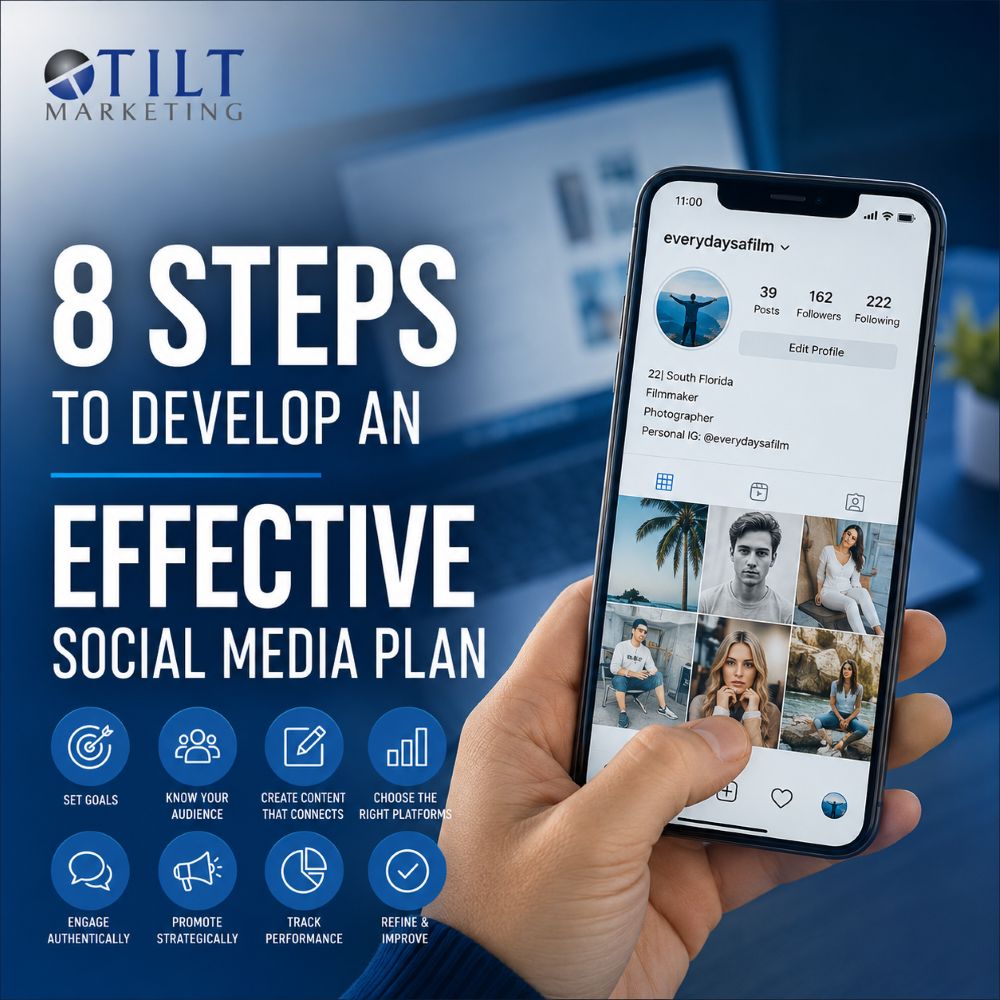
8 Steps to Develop an Effective Social Media Plan
Updated for 2026
Social media can be a powerful and inexpensive marketing tool for businesses of all sizes. However, many business owners struggle with where to begin, what to post and how to stay consistent. One of the most common marketing mistakes I see is businesses jumping into social media without a clear plan. Rather than trying to do everything, focus on developing a practical strategy you can realistically maintain over time. Here are eight steps to help create a stronger social media plan.
Step #1: Define Your Focus
Before creating accounts and posting content, determine what you want social media to accomplish.
Are you trying to:
- Increase brand awareness?
- Generate leads?
- Build credibility?
- Increase website traffic?
- Stay connected with customers?
- Promote products or services?
Trying to be active on every social media platform often creates more work than results. Focus on one or two platforms your audience actually uses. Having a clear purpose makes it easier to develop content and measure results.
Step #2: Understand Your Audience
Spend time thinking about who you want to reach.
Consider:
- Age ranges
- Interests
- Challenges
- Geographic areas
- Buying habits
- Preferred content types
Audience demographics matter, but behaviors matter too. Understanding how people consume content can help shape your approach. The better you understand your audience, the more relevant your content becomes.
Step #3: Select the Right Social Media Platforms
Not every platform makes sense for every business.
For example:
- Facebook often works well for business-to-consumer companies
- LinkedIn is often beneficial for business-to-business companies
- Instagram works well for visually driven businesses
Rather than trying to maintain several platforms, choose the ones most likely to reach your audience effectively.
Step #4: Create a Content Calendar
One of the easiest ways to stay organized is by developing a content calendar. Planning content in advance can reduce stress and help maintain consistency.
Ideas may include:
- Tips and advice
- Project updates
- Before-and-after photos
- Reviews and testimonials
- Promotions
- Frequently asked questions
- Company updates
- Seasonal content
AI tools can also help brainstorm ideas and speed up content creation. Just remember to personalize content so it reflects your experience and voice.
Step #5: Mix Content Types
Variety keeps social media more interesting.
Consider layering in:
- Photos
- Graphics
- Videos
- Customer reviews
- Polls
- Articles
- Behind-the-scenes content
- Short videos or Reels
Simple videos, project updates and quick tips often perform well.
Step #6: Be Consistent
Consistency is often more important than posting volume. You do not need to post multiple times every day. A realistic schedule that you can maintain is far better than posting heavily for two weeks and disappearing for two months. Focus on quality and consistency.
Step #7: Engage and Participate
Social media is not simply a broadcasting tool. Meaningful interaction and conversations often outperform simply posting more content. Respond to comments, answer questions, acknowledge feedback and participate in discussions when appropriate. Remember—it is called social media for a reason.
Step #8: Measure Results and Adjust
Pay attention to what is working and what is not.
Rather than focusing only on likes and followers, also consider:
- Website traffic
- Inquiries
- Engagement
- Shares
- Leads generated
- Actual business results
Social media strategies often improve over time through testing and small adjustments. You do not need a perfect plan to get started. Start small, stay consistent and make adjustments along the way. Businesses that approach social media strategically often see better long-term results than those simply posting randomly.
If you found this article helpful, please share it on social media and connect with us online. Thank you!