How AI Helped Turn Existing Marketing Assets Into an Evergreen Social Media Content Library
Creating consistent social media content is one of those marketing tasks that sounds simple until you actually sit down to do it. You need the right images, strong captions, working links, relevant hashtags, and a format that can be uploaded into a scheduling platform without creating more manual work than it saves.
As part of Tilt Marketing’s ongoing use of AI-enhanced marketing workflows, I recently developed and tested a process for turning existing website content into a ready-to-upload evergreen social media content library. The goal was simple: use content that already existed, organize it into a repeatable system, and create a CSV file that could be uploaded into a social media scheduling platform.
Starting With Existing Marketing Assets
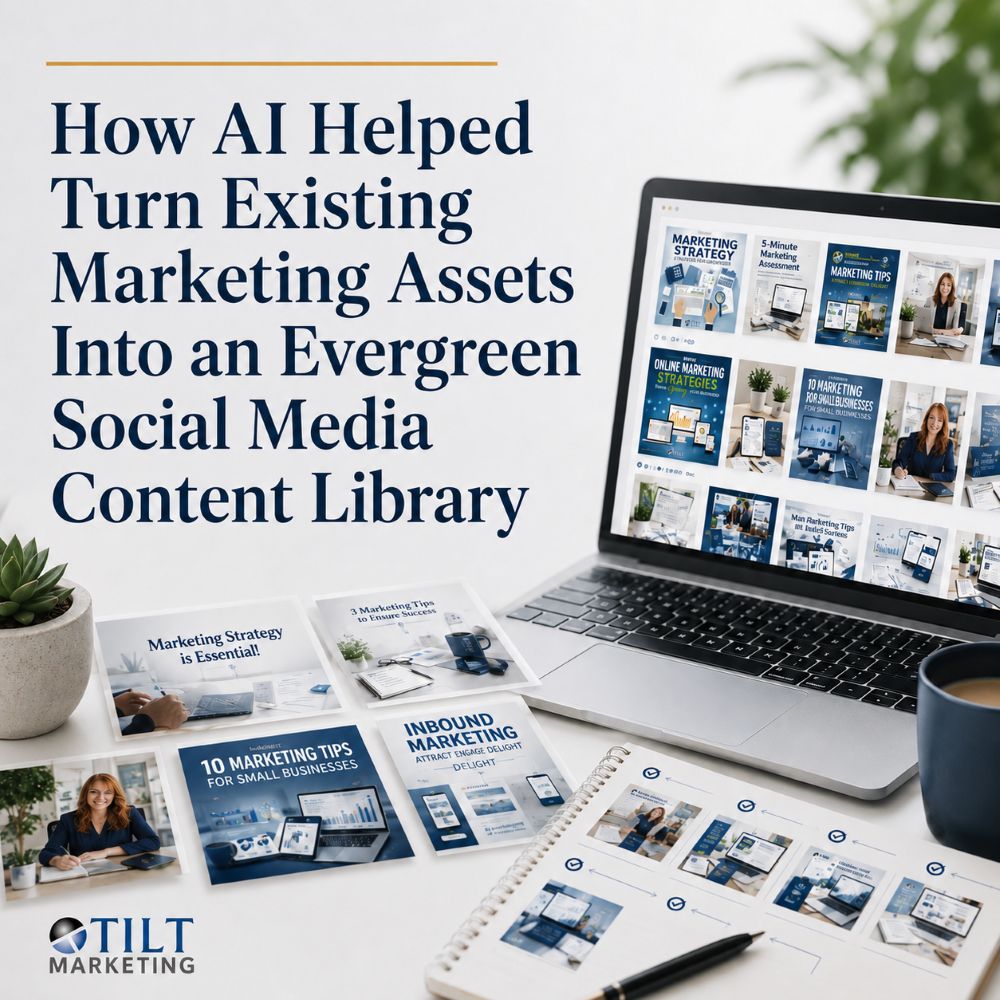
The process began with materials already available on the website, including service pages, blog posts, branded graphics, location images, and evergreen social media visuals.
Instead of starting from scratch, the workflow focused on identifying content that could be repurposed into useful social media posts. This included images already published on the site, captions that had already been written or revised, and page links that could support additional website traffic.
That is an important distinction. AI was not being used to invent a marketing strategy from nothing. It was being used to help organize, format, and streamline content that already had a strategic purpose.
Building the Evergreen Content Structure
The most effective format turned out to be simple:
Message / Image URL / Link
The message field included the post caption and hashtags. The image URL pointed directly to the image hosted on the website. The link field included the relevant page or blog post when a link applied.
This format worked especially well for evergreen content because it provided the essentials needed for scheduling across multiple platforms while keeping the upload process manageable.
More advanced platform-specific features, such as Instagram first comments or Google Business Profile call-to-action buttons, can still be adjusted manually after upload. For this workflow, the biggest time savings came from importing the correct caption, image, hashtags, and link automatically.
Testing the Process Before Scaling It
A key part of the process was testing small batches before building the full content library.
Initial test sets helped confirm which CSV format worked, whether the scheduling platform pulled in images correctly, and which image file types were accepted. One important lesson was that JPG and PNG image URLs worked reliably, while WEBP files did not always import correctly.
That discovery matters for future client work. If a social media scheduling platform does not reliably support WEBP image URLs, those images need to be converted or replaced before building the final upload file. Testing also helped confirm that a streamlined process still needs human review. AI can assist with matching posts, formatting captions, and organizing content, but someone still needs to confirm that the right image, caption, and link are paired together.
Creating a More Natural Posting Order
Once the individual content sets were created, the next step was combining them into one larger evergreen library.
Instead of grouping all posts by category, the final list was arranged in a more natural-looking order. For example, property images, local area posts, quote graphics, and service-related content were mixed together so the evergreen queue would feel varied and less repetitive. This is a small but important detail. A content library should not look like it was uploaded in batches. It should feel like a thoughtful mix of helpful, visual, and brand-building posts over time.
Why This Workflow Matters
For many businesses, the challenge is not a lack of content. The challenge is turning existing content into something organized, usable, and consistent.
Most companies already have marketing assets sitting on their websites, in blog archives, in project galleries, or in old campaign files. With the right process, those assets can become a practical evergreen content library that supports visibility over time.
This kind of workflow can help businesses:
- Save time creating social media posts
- Repurpose website and blog content more effectively
- Maintain a more consistent posting schedule
- Drive traffic back to important website pages
- Reduce repetitive manual formatting work
- Build a long-term content library from existing assets
AI Works Best With Strategy Behind It
The biggest takeaway from this project was not that AI can “do social media.” The real takeaway is that AI can help make a strong marketing process more efficient.
The strategy still matters. The messaging still matters. The image choices still matter. The platform setup still matters.
AI becomes most useful when it is paired with experienced marketing judgment, clear goals, and a practical understanding of how the content will actually be used. For this project, AI helped speed up the workflow, organize the content, create captions, format CSV files, test upload structures, identify file-type issues, and prepare the final evergreen library.
The result was not just a batch of social media posts. It was a repeatable marketing process that can be adapted for future content libraries and client projects.
A Practical Way to Extend the Life of Existing Content
Evergreen social media content does not have to be complicated. With the right structure, existing website images, blog posts, service pages, and branded graphics can be turned into a useful content library that supports ongoing visibility.
For businesses that want to stay active online without constantly starting from scratch, this type of process can be a smart, efficient way to get more value from content they already have.
At Tilt Marketing, this is exactly the kind of practical AI-enhanced workflow we are continuing to develop: experienced marketing strategy supported by tools that help make implementation faster, cleaner, and more consistent.